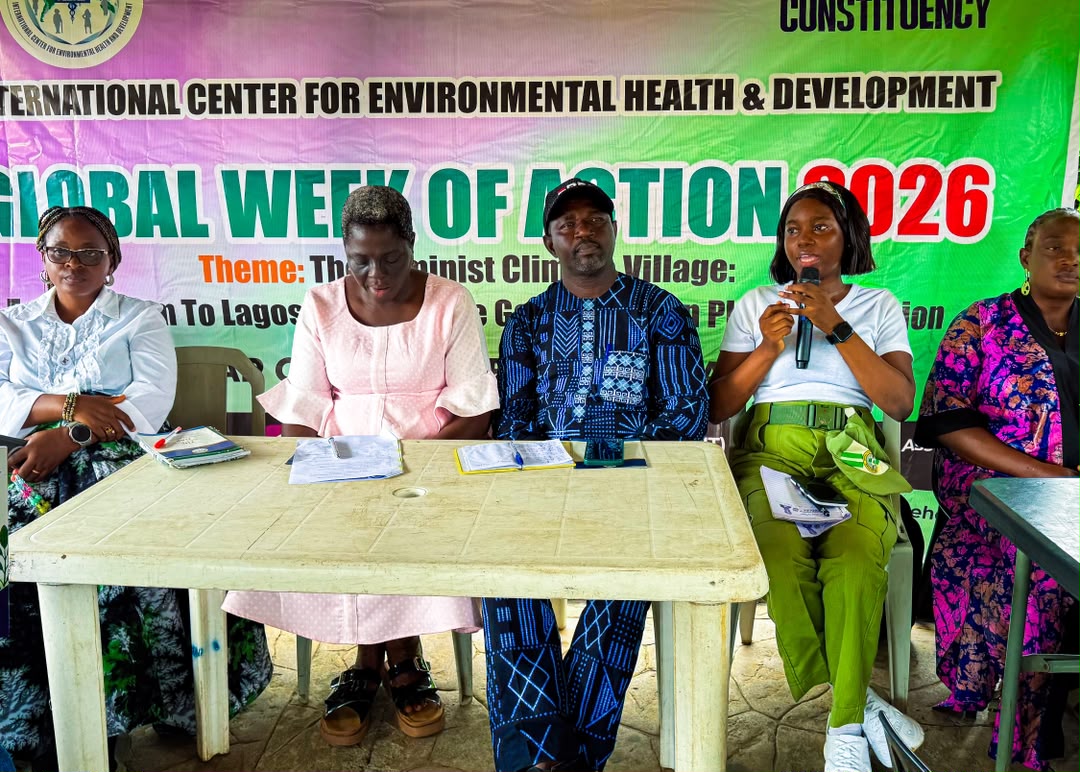
On 17th September 2026, ICEHD convened the Feminist Climate Village at the Ixora Gazebo in JJT Park, Alausa, Ikeja, Lagos, Nigeria with support from the Women and Gender Constituency as part of the Global week of Action 2026 #ActonthebelemGAP campaign. The one-day gathering aimed to bring the Belém Gender Action Plan (GAP), a nine-year UNFCCC framework adopted at COP30 to integrate gender into climate action, into a community-level conversation in Lagos. The gazebo's hut-like design gave the space a village feel, which suited an event centred on the experiences of rural women.
A total of 42 participants took part, 39 in person and 3 online, including rural women farmers, young women and students, civil society organisations, NYSC corps members and the media. Representatives of the Lagos State Ministry of Environment, the Ministry of Women Affairs and LASEPA attended and stayed engaged throughout.
The day began with an opening circle built around a central question: at every table, whose voice on climate is missing, and why? A plain-language session followed to explain the GAP and its five priority areas. It then moved into Seeds of Change, an intergenerational panel in which a rural woman farmer, a student and a civil society representative shared lived experience. The farmer described how unpredictable rainfall forced her to sell produce well below its expected value, saw crops fail and derailed planned projects. A young corps member spoke of the hope she draws from women stepping into climate leadership, and of the need for wider access to climate information, real seats in government decision-making spaces and climate finance to turn ideas into projects.
Participants then worked through a Policy Café and an Action Lab, where they named the barriers holding women back, including limited access to finance and land, patriarchal norms, gaps in climate education and gender-based violence. They also developed practical 12-month recommendations. Their proposals included training and mentoring for women and girls, women-led climate committees, small grants, regular community meetings, gender-responsive budgets and better tracking of women's participation. One group summed up its message in three words: "Train, organise, fund." A Gallery Walk followed, in which participants voted on the strongest ideas, and the day closed with a Commitment Wall and a group pledge affirming that climate action must be fair, inclusive and rooted in people's lives.
The impact was clear. Before the event, 72.7% of survey respondents did not know about the Belém GAP, but afterwards 90.3% said they understood it. Government representatives listened, participated and contributed to the conversation, which gave grassroots women and young people a rare chance to raise their concerns directly with decision-makers. The gathering left behind a set of recommendations and personal commitments that ICEHD and its partners will build on in continued advocacy and follow-up.